Everyday care, costs and behaviour — from cat years and daily food portions to litter maths,
vet budgets, kitten care schedules and cat-proofing your home. Type your cat question and get a straight,
practical answer in seconds. The full detailed report costs less than a cup of coffee: $2.95.
16 toolsFree instant local answers≈ one coffee ($2.95) for the full reportNo sign-up · No spam · Educational
Scratching the sofa and missing the litter box are the two behaviour problems most likely to end a cat's time in a home, and both are almost always fixable once you read them correctly. Scratching is not naughtiness: cats scratch to mark territory, stretch muscles and maintain claws, so the fix is redirection — offering better surfaces where the cat already wants to scratch, not punishment, which cats link to the moment rather than the behaviour and which simply makes them anxious. A cat that stops using the tray is sending a message: often medical, so the vet comes first, then the tray itself — bigger, open, unscented litter, scooped daily, in a quiet spot, with an extra tray in multi-cat homes. This guide walks both problems with the practical fixes that actually work, plus the golden rule: sudden behaviour change in an older cat is a health question before it is a training one.
⚡ Free instant check
Behaviour basics for the two problems that end up in shelters most often — scratching the wrong things and missing the litter box — plus the simple fixes that work.
Why it matters
Scratching is not naughtiness: cats scratch to mark territory, stretch muscles and maintain claws, so the fix is redirecting to approved surfaces, not punishing.
A cat that stops using the tray is telling you something — a medical problem, a dirty tray, or a dislike of the location, litter or tray type.
Punishment backfires with cats: they link the punishment to you or the moment, not the behaviour, and the result is a more anxious cat.
Most cats prefer large, open, unscented litter trays in quiet, low-traffic spots — and many refuse covered trays or strong-scented litter.
Your checklist
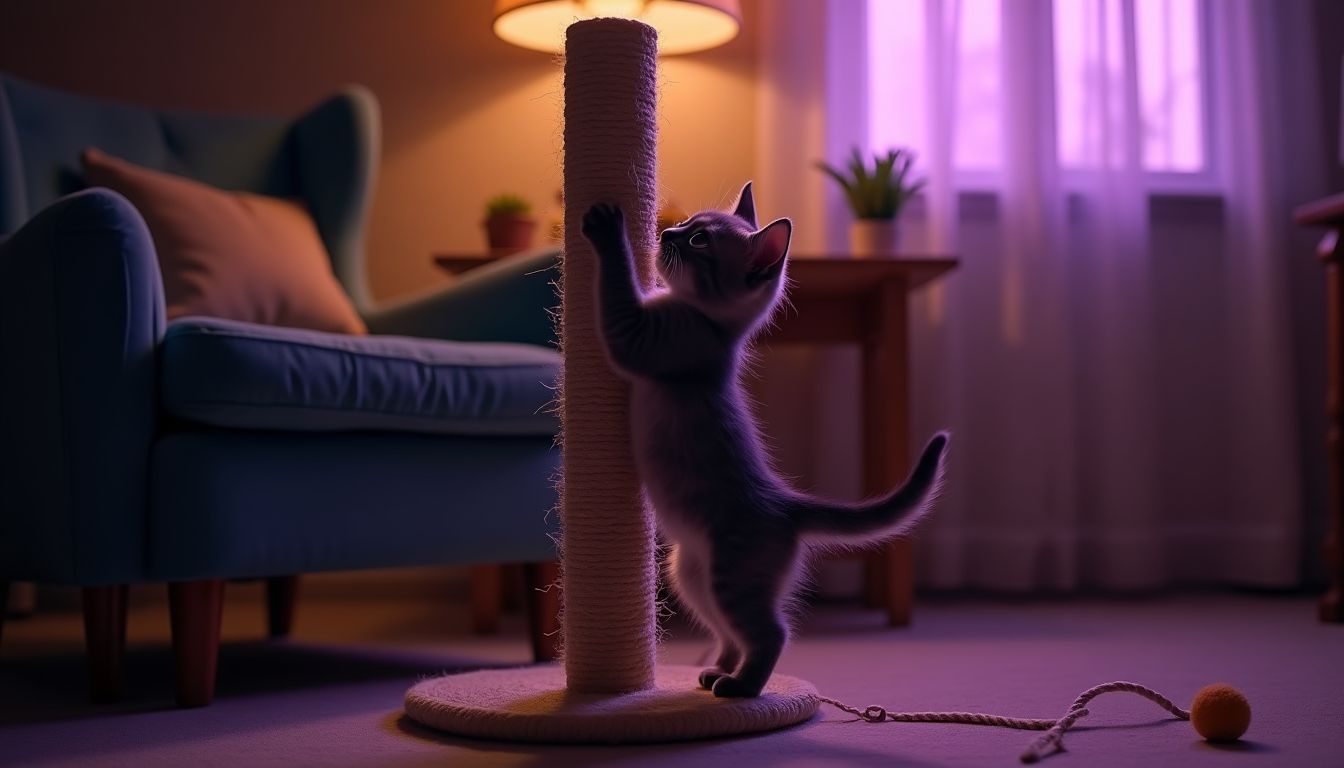
Offer several scratching surfaces — vertical sisal posts and horizontal cardboard — near where the cat already scratches.
Make forbidden spots less appealing with double-sided tape or furniture protectors during the transition.
Reward scratching on approved posts with treats; never punish or squirt.
For tray issues, start with the vet visit — medical causes come first.
Then fix the tray: bigger, open, unscented litter, scooped daily, in a quiet spot.
Add an extra tray in multi-cat homes — one per cat plus one.
If a behaviour change appears suddenly in an older cat, treat it as a health question before a training one.
❓ Cat Behaviour Basics: Scratching & Litter — FAQ
Why does my cat scratch the furniture?
Cats scratch to mark territory with scent glands in their paws, to stretch the back and shoulder muscles, and to maintain claw health. The fix is redirection: put appealing scratching surfaces — vertical sisal, horizontal cardboard — right where the cat already scratches, and reward their use.
Why has my cat stopped using the litter box?
Work through it in order: a vet visit first, because urinary issues and arthritis are common medical causes; then the tray itself — bigger, open, unscented litter, scooped daily, in a quiet low-traffic spot; then location and number of trays, with one per cat plus one extra in multi-cat homes.
Does punishing a cat work for bad behaviour?
No. Cats associate punishment with what is happening in the moment — often you — not with the behaviour you are trying to stop. The result is a more anxious cat and a behaviour that continues. Redirect to an approved alternative and reward it instead.
Every tool answers instantly from our own knowledge and calculators — no AI wait, no account.
Honest estimates built on widely used feeding formulas, cost maths and veterinary guidance, always warm and
practical — educational only, never a substitute for a visit to your veterinarian. Every cat is different,
and if yours seems unwell, see your vet.
Want the deeper, personalised version? Each has a $2.95 full report.